


A Road That Stands Out
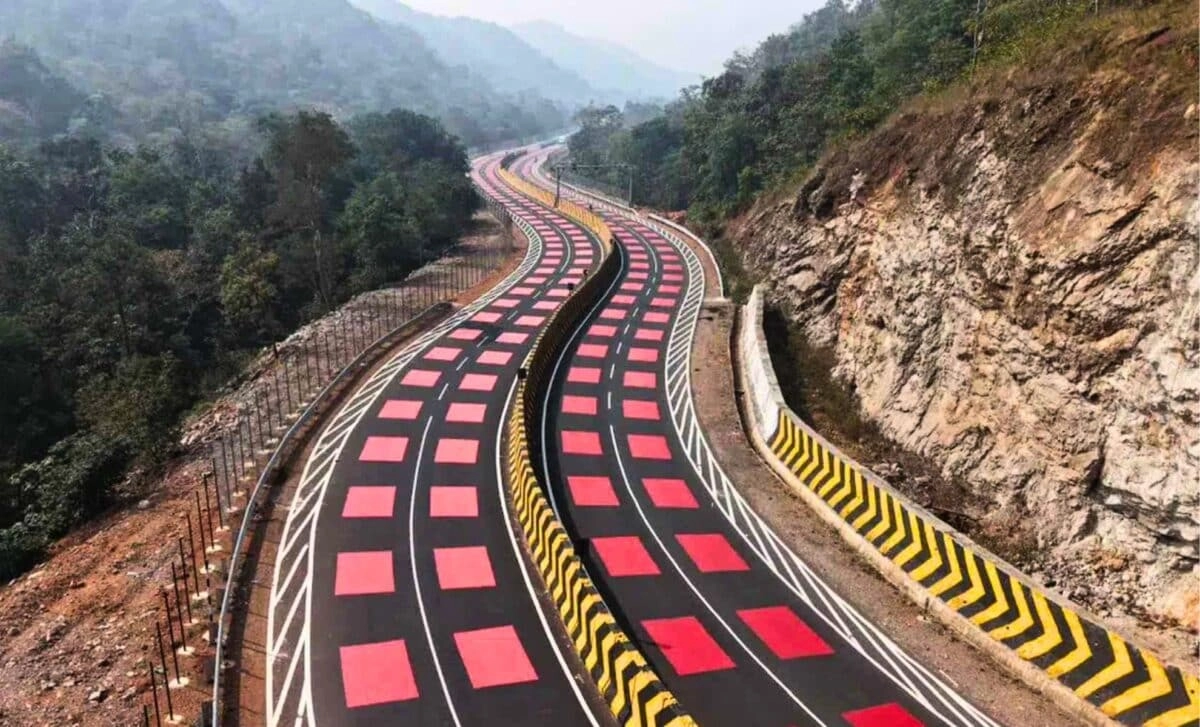
India has introduced a unique “Red Road” to protect animals on highways. This special road is not just about looks, it is designed to make driving safer in forest areas.
Launched in December 2025, it shows how simple ideas can solve big problems. When drivers see a bright red road, they become alert and slow down. This helps prevent accidents, especially in places where animals often cross roads.
The Problem on Forest Highways
Highways help people travel faster, but many pass through forests. This breaks animal [[habitats::natural homes of animals]] and forces animals to cross busy roads for food and water. Since animals do not understand traffic, accidents often happen.
Regular warning signs and speed breakers are not always enough, especially in [[remote::far away and hard to reach]] forest areas. So, experts needed a smarter and safer solution that works naturally without sudden braking.
How the Red Road Works
The Red Road is a 2-kilometre stretch on National Highway 45 in Madhya Pradesh, between Bhopal and Jabalpur. It passes through the Veerangana Durgavati Tiger Reserve, a home to many wild animals.
The road is covered with a thin red [[thermoplastic::a material that melts when heated and hardens when cooled]] layer, about 5 mm thick. This creates a slight vibration, called a “tabletop effect,” when vehicles pass over it. Along with the bright red colour, this makes drivers slow down automatically without even thinking much.
More Than Just a Colour
The Red Road is part of a bigger wildlife safety plan. Around 25 [[underpasses::paths built under roads for safe crossing]] have been built so animals can cross safely. Tall fences guide animals toward these crossings instead of the highway. [[barriers::structures that block or reduce something]] reduce noise and block bright headlights, making the area calmer for animals. There are also solar-powered cameras to track animal movement and help scientists study their [[behaviour::the way animals act]].
What We Learn from This
This Red Road shows that development and nature can go together. It reduces accidents, protects wildlife, and keeps travel smooth for people.
If it works well, similar roads can be built across India in forest areas.
Quick Revision
The Red Road helps slow down drivers and protect animals on forest highways.
It uses colour and vibration to make drivers more alert without sudden braking.
It is part of a larger plan including underpasses, fences, and monitoring systems.

